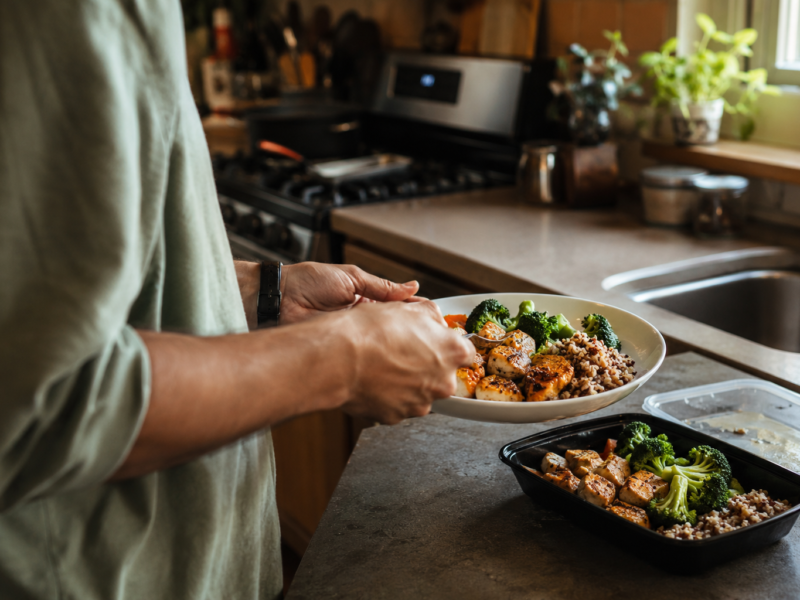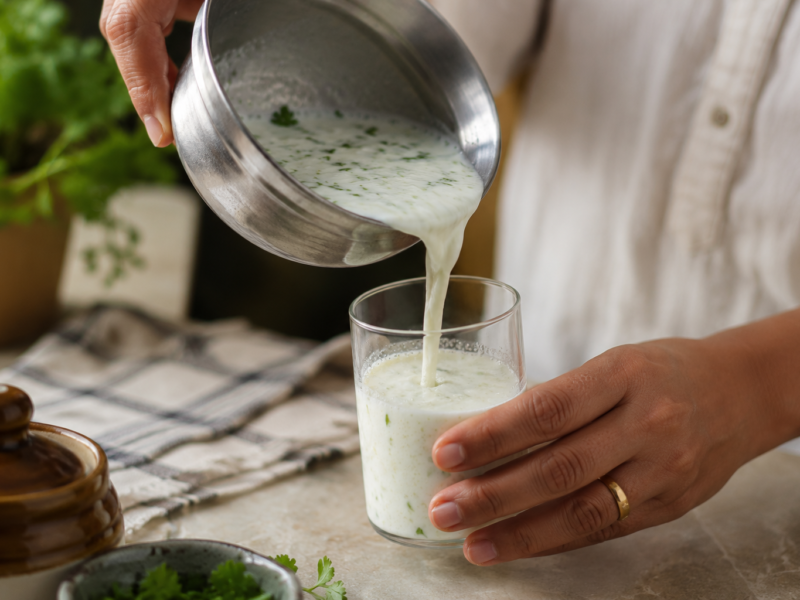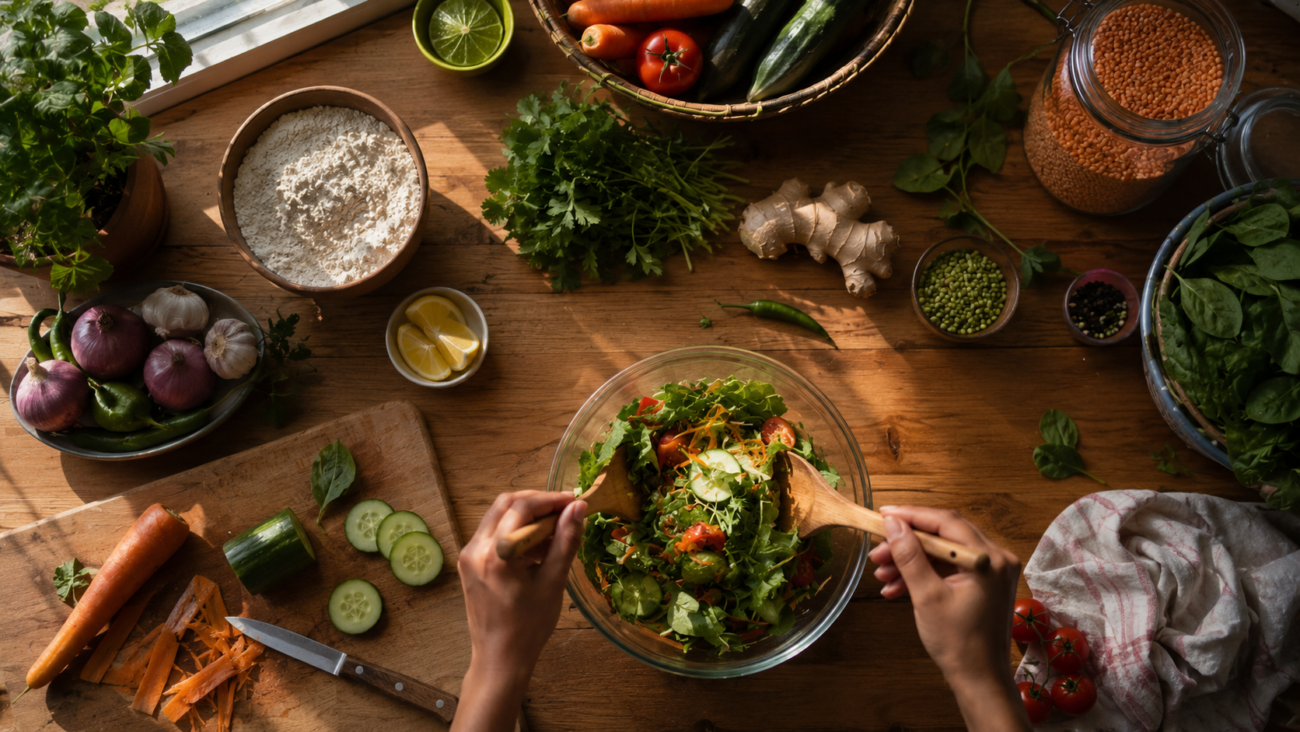
What Is a Healthy Diet? A Complete Guide to Eating Right Every Day
The word “diet” has a branding problem. Say it out loud and most people brace themselves for a list of banned foods, a countdown of calories, or another plan they’ll quietly abandon by week three. That’s a shame, because the actual definition of the word has nothing to do with restriction at all. A diet is simply the pattern of what someone eats, day after day, month after month. Nothing more dramatic than that.
A genuinely healthy diet, then, isn’t a program you follow for six weeks. It’s the sum of thousands of small, ordinary food choices what’s on your plate most days, not what’s on it during a single ambitious Monday. This guide looks at what actually makes that everyday pattern a healthy one, and why so much popular advice makes it sound far more complicated than it needs to be.
Table of Contents
What “Healthy Eating” Really Comes Down To
Strip away the trends, and a healthy way of eating boils down to a fairly short list: your body consistently gets the nutrients and energy it needs, your hydration is reasonable, and the way you eat is something you could realistically sustain for years not just until the motivation wears off.
It has nothing to do with eating flawlessly. Entire food groups don’t need to be exiled unless a doctor has specifically advised it, and “clean eating” as a concept is more marketing language than nutritional science.
What counts as healthy also isn’t identical from person to person it depends on your activity level, your health history, and often the food culture you grew up in.
Four Patterns Worth Building Into Most Days
Instead of memorizing a long list of rules, it’s more useful to notice a handful of patterns that show up again and again across nutrition research, regardless of what cuisine or region it’s studying.
A Plate With Real Variety
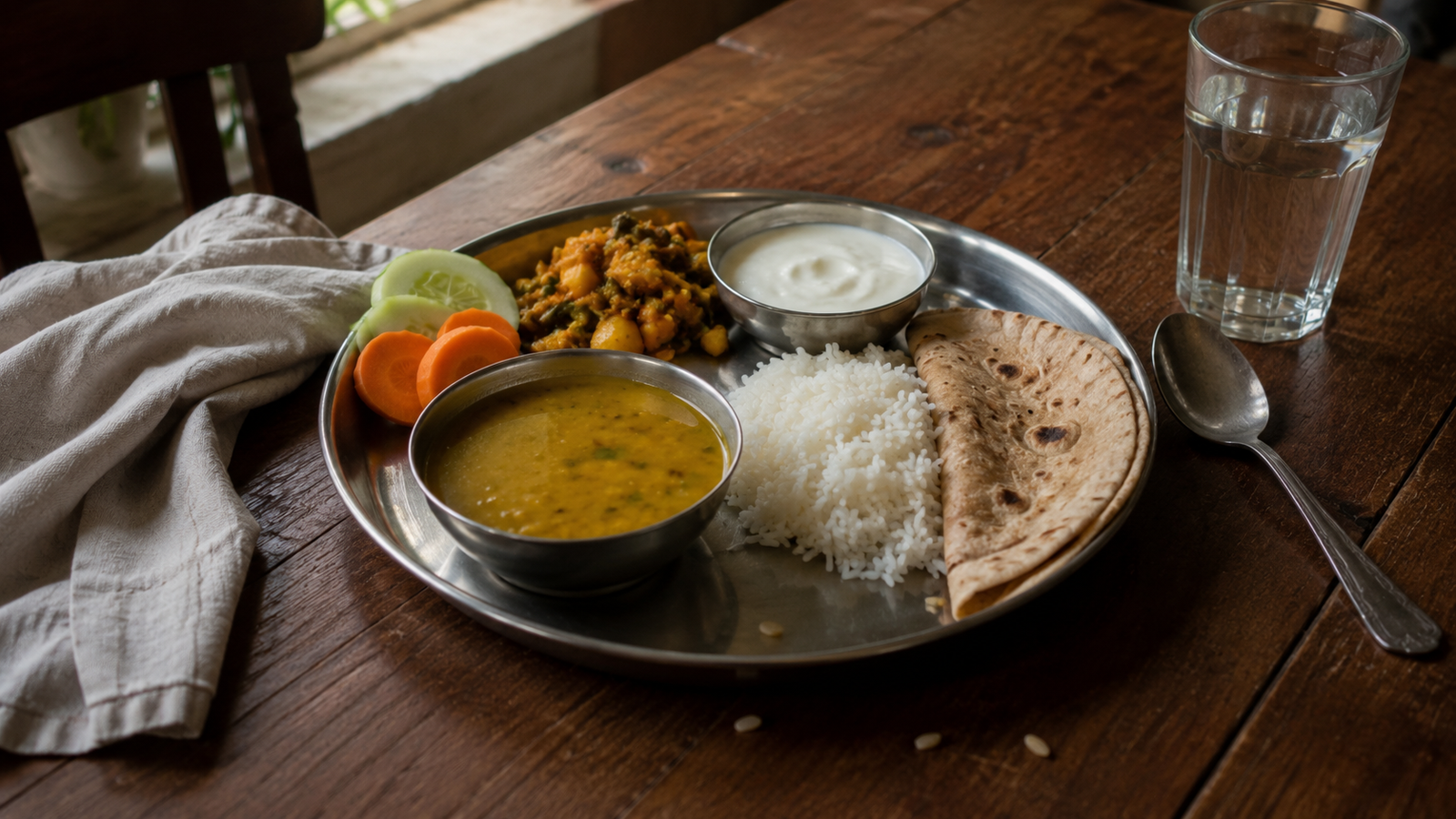
A simple way to picture this: roughly half the plate in vegetables, a portion of whole grains or a similar carbohydrate, a source of protein, and a modest amount of healthy fat with fruit, dairy, or dal filling in the gaps depending on the meal. No single ingredient needs to dominate, and none needs to be treated as forbidden.
More of the Plate, Less of the Package
If there’s one adjustment that tends to move the needle more than any other, it’s this: gradually shifting the balance toward food closer to its natural state vegetables, legumes, fruit, whole grains and away from heavily packaged, ultra-processed items.
Including more healthy foods like fruits, vegetables, legumes, whole grains, nuts, and seeds in your daily meals can make this transition easier.
Awareness Instead of Restriction
Healthy eating has less to do with banning specific foods and more to do with paying attention how much, how often, how quickly. A traditional thali is a useful example here: small portions of several different things, rather than a large serving of just one.
Slowing down and noticing genuine hunger cues tends to do more for portion control than any rigid rule ever could.
Repetition Over Perfection
A single rich meal, a skipped vegetable, or a plate of dessert doesn’t erase a healthy diet because a diet, again, is a pattern measured over time, not a single decision.
People who eat well over the long run are rarely the ones who eat flawlessly. They’re the ones who eat reasonably well, most days, without much drama about it.
Food Doesn’t Stay in Its Own Lane
What you eat rarely stays contained to just digestion. It shapes your energy through the afternoon, your mood, how well you sleep that night, and even how your body responds under pressure.
Over time, balanced eating also supports immune system health, helping your body respond more effectively to everyday illnesses.
In that sense, this topic was never really separate from the rest of wellness how you eat is tangled up with how you sleep, how you handle stress, and how much energy you have left over to move your body during the day.
Where This Series Goes From Here
Rather than cramming everything into a single article, this guide is really the entry point into a small series, each one going deeper into a specific piece of everyday eating:
- Everyday Nutrition Basics — macronutrients, portions, and balanced plates explained without jargon
- Mindful & Emotional Eating — recognizing stress eating, eating without guilt, and telling hunger apart from cravings
- Traditional & Seasonal Eating — Ayurvedic eating principles, seasonal ingredients, and food-as-medicine ideas rooted in everyday home cooking
- Practical Food Habits — meal planning, eating out without derailing your routine, and building habits around family meals
A Reasonable Place to Start
None of this requires an overnight overhaul. A realistic starting point is picking one meal a day to add an extra vegetable to, or simply slowing down long enough to actually taste what’s in front of you.
Small, repeatable adjustments practiced consistently over months tend to outperform any dramatic, short-lived diet by a wide margin.
Frequently Asked Questions
What is considered a healthy diet?
A healthy diet includes a mix of vegetables, whole grains, protein, and healthy fats, with limited reliance on ultra-processed foods. It’s meant to be flexible and sustainable rather than restrictive, and it looks somewhat different depending on the person, their culture, and their lifestyle
How many meals a day is considered healthy?
There isn’t one universally correct number. Three balanced meals suits many people well, while others do better eating smaller amounts more frequently. Overall food quality and consistency tend to matter more than hitting a specific meal count.
Do I need to cut carbs to eat healthy?
Not necessarily. Whole, minimally processed carbohydrates like whole grains, legumes, and fruit are a normal part of a balanced diet. The more meaningful distinction is between whole and heavily processed sources, rather than carbohydrates versus no carbohydrates at all.
Can traditional home-cooked food be healthy?
Often, yes. Traditional home-cooked meals frequently already contain the balance a healthy diet calls for grains, lentils, vegetables, and naturally portioned servings. For most people, the bigger opportunity is reducing packaged and processed food around those meals, not replacing the meals themselves.
What’s the difference between a healthy diet and a weight-loss diet?
A healthy diet is oriented around long-term nourishment and consistency, while a weight-loss diet is usually a temporary, calorie-focused plan. A genuinely healthy diet can support a healthy weight as a byproduct, but weight loss isn’t its only or central goal.
Tired of the same old dinner recipes? Then read the blog on 5 Quick Indian Vegetarian Dinner Recipes